Why Scale Matters in Building Game Universes
2 August 2026
Creating expansive game universes isn't just about going big for the sake of it. There's something truly mesmerizing about stepping into a game world that feels alive, vast, and ready to be explored. Whether you're traversing the galaxy in a spaceship or wandering through a post-apocalyptic wasteland, the scale of a game universe can completely shape a player's experience.
But, let’s break it down—why does scale matter so much in building these incredible virtual worlds? Let’s dive deep into the impact of scale, how it enhances storytelling, gameplay mechanics, player immersion, and even the longevity of a game itself.
What Do We Mean By "Scale" in Games?
Before we zoom into the nuts and bolts, let’s answer the big question: What exactly is "scale" in the context of video games?When we say "scale," we’re not just talking about the size of a map. Sure, square mileage plays a role, but it goes beyond that. Scale is about the scope and magnitude of a game universe. It includes:
- The physical size of the world (or universe)
- The number of explorable locations
- The diversity of environments and biomes
- The depth of lore and backstory
- The complexity of factions, characters, cultures, and histories
In a nutshell, scale is what gives a game that feeling of stepping into a living, breathing universe.
Immersion Starts With Size
Have you ever found yourself getting lost in a game—not just physically, but mentally? Immersion is one of the most powerful tools in game design, and scale plays a massive role in it.A larger, more detailed game universe invites players to suspend disbelief. It pulls them in and makes them forget they’re playing a game. Think of games like The Elder Scrolls V: Skyrim, The Witcher 3, or Red Dead Redemption 2. These games whisk players away to massive, intricate worlds filled with life, lore, and endless possibilities.
With large-scale environments, you get a sense of place. You feel like you’re just a tiny part of something bigger—a world that continues on with or without you.
Bigger Universes = Bigger Stories
You can’t tell an epic story in a cramped room, right? That’s where scale steps in again.In sprawling game universes, storytelling takes on a whole new flavor. Writers and designers can weave together multiple stories, quests, side plots, and character arcs that span continents—or galaxies! Whether you’re uncovering ancient alien civilizations or navigating the politics of warring empires, a larger scale allows for rich, layered storytelling.
And here’s the kicker: it’s not just about having more space—it's about using that space to drop clues, build tension, and let players piece together the narrative themselves. In games like Mass Effect or Star Wars: Knights of the Old Republic, the sheer scale of the universe gives gravitas to every decision you make.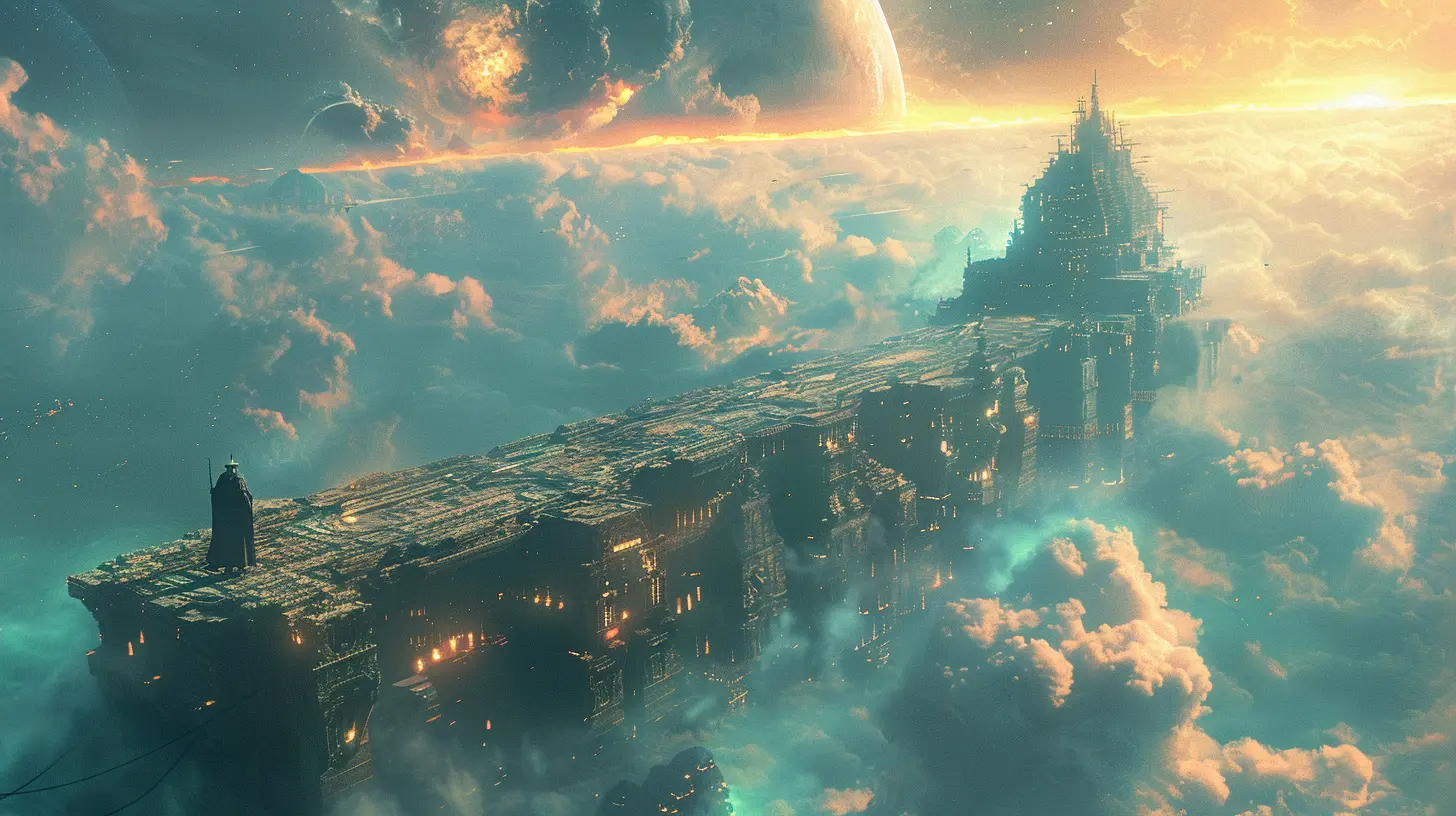
Freedom to Explore
Let’s be real—nobody likes being railroaded. One of the major appeals of modern gaming is freedom. And freedom? Well, it thrives in big, open spaces.Large-scale games offer exploration that actually means something. You’re not just walking around aimlessly; you're discovering forgotten temples, stumbling upon hidden enemies, and unlocking secrets the devs tucked away for the curious ones.
The best part? That sense of "what’s over that hill?" never gets old, as long as the world is well-designed. In games like Minecraft or No Man’s Sky, scale isn’t just for show—it’s a playground for creativity and discovery.
Gameplay Variety and Player Choice
When you have a huge world to play with, you can offer players an insane variety of gameplay styles. Want to be a stealthy sniper today and a brute-force warrior tomorrow? In large games, you can switch it up depending on where you go or who you meet.Scale empowers developers to:
- Add different cultures, factions, and economies
- Introduce unique terrain that affects combat and strategy
- Include diverse wildlife, enemies, and ecosystems
- Support dynamic weather systems and day-night cycles
This variety creates a sandbox where players aren’t locked into one path. Instead, the game world says, "Hey, do it your way."
Longevity and Replayability
Let’s talk value for money. Games are expensive, right? Players want bang for their buck, and large-scale games often deliver in spades.With massive game universes, there’s always something new to find. Players might finish the main story, only to discover entirely new regions, hidden quests, or alternate paths they missed the first time around. This creates a huge incentive to replay the game or keep exploring long after the credits roll.
Take Grand Theft Auto V or The Legend of Zelda: Breath of the Wild. The main quests are fantastic, but it’s the extra stuff—the mini-games, collectibles, hidden locations—that keeps players coming back.
Dynamic Worlds Keep Things Fresh
When scale meets dynamic world systems, magic happens.In smaller games, changes in the world might feel scripted or linear. But in large-scale universes, the game world can evolve around the player. Towns get destroyed, NPCs remember your choices, factions rise and fall—all based on your actions.
Games like Fallout or Cyberpunk 2077 attempt to do this by combining scale with consequence. You’re not just a character—you’re a force in the world, and your actions ripple far and wide.
Technical Considerations and Challenges
Now, let’s not sugarcoat it—building a large-scale game universe isn’t all sunshine and loot drops. There are massive technical challenges developers have to tackle:- World loading and memory limits
- Seamless transitions between zones
- AI pathfinding in larger environments
- Handling player progression in non-linear spaces
- Keeping performance smooth across diverse hardware
Still, advances in game engines like Unreal Engine 5 are making it easier to render large scales without sacrificing detail or performance. It’s a balancing act, but one that pays off big time.
Procedural Generation vs. Handcrafted Worlds
There’s a lot of debate around how to scale a game universe. Should developers handcraft every single corner? Or should they use procedural generation to create vast, infinite worlds?Each method has its merits:
- Handcrafted worlds offer rich detail and intentional design, but they take tons of time and resources to build.
- Procedural generation can create mind-blowing scale and variety with less effort—but it can feel random or empty if not done right.
The best games often blend the two. No Man’s Sky, for example, uses procedural algorithms to build planets and ecosystems, but layers handcrafted missions and lore to give it purpose.
Impact on Game Communities and Modding
Big game universes often become more than just entertainment—they transform into hubs for creativity. Communities grow around these games, sharing stories, mods, and custom content.Take Skyrim. Its large scale has given rise to one of the most passionate modding communities in gaming history. Players have added entirely new continents, storylines, and even full-blown expansions—years after the original release.
When scale is done right, it leaves enough room for players to make the universe their own.
Not Every Game Needs Massive Scale
Let’s be clear—not every game has to be a sprawling epic. Some of the best gaming experiences come from tight, focused games with minimal scope. Indie hits like Limbo or Celeste prove that small can be powerful.But when your goal is to build a universe—a place where stories, systems, and players can evolve together—scale becomes your most important tool.
It’s the canvas on which everything else is painted.
Final Thoughts: It's About Meaningful Scale
At the end of the day, it’s not just about making things bigger—it’s about making them matter. A massive game universe with nothing to do is just empty space. What truly grabs players is when everything in the game feels connected, rich, and worth exploring.So, why does scale matter in building game universes?
Because it transforms gameplay into experience.
When done right, scale gives players more than a game—it gives them a *world.
all images in this post were generated using AI tools
Category:
Game WorldsAuthor:

Leandro Banks