Environments That Became Characters in Their Own Right
31 January 2026
Have you ever played a game where the environment felt more alive than some of the characters? Where the setting did more than serve as a pretty backdrop—it spoke to you, challenged you, and even haunted you long after you turned the game off?
Welcome to the world of environments that became characters in their own right.
In the best games, the setting doesn’t just exist—it breathes. It whispers secrets through crumbling walls, tells stories through eerie lighting, and evokes emotion with the swing of a creaky door or a sudden gust of wind. These worlds aren’t just pixels and geometry. They’re personalities. And oh boy, they’ve got attitude.
Let’s dive into the games that mastered this magical trick—transforming a simple environment into something unforgettable.
The Power of the World in Storytelling
Before jumping into specific examples, let’s ask: Why do environments matter so much in games?Think about it. In film and books, the setting supports the plot. But in games? It's hands-on. You interact with it. Move through it. Survive it. An environment sets the mood. It establishes tone. Sometimes, it even becomes the main obstacle or the narrator.
Games give us agency, and because of that, the setting becomes a sandbox or a prison—or a sentient, silent witness to everything we do. When done right, it's not just the background. It's the soul of the game.
Now let’s break down some iconic examples where the environment didn’t just support the narrative... it was the narrative.
1. Rapture — BioShock
Let’s start with a bang.Rapture isn’t just a city under the sea. It’s a city that drowned itself in its ideals. You can feel its broken dreams hanging in every shattered display window and hear its political decay in every audio diary.
What makes Rapture so special? It’s the way it reacts to you—it's mysterious, atmospheric, and freakishly immersive. Every leaky pipe screams of neglect. Every abandoned nursery tells you a thousand-word tale without saying a word.
It’s alive in the worst way possible. And as you explore deeper, you realize it’s not just the Splicers going insane—it’s the city itself that’s mad.
2. Hyrule — The Legend of Zelda: Breath of the Wild
This isn’t your grandpa’s Hyrule.In Breath of the Wild, Hyrule doesn't just wait around for you—it dares you. It changes with every moment. Storms roll in, trees catch fire, cliffs demand creative climbing, and lightning strikes... well, you, if you're holding a metal sword.
But what really elevates this Hyrule? Its silence. It says so much by saying so little. The ruined temples whisper of past battles. The lonely, meandering piano score amplifies your solitude. It balances serenity with survival.
Hyrule here isn’t just a fantasy land—it’s a puzzle, a poem, and a playground rolled into one. It watches you grow from a sleep-soaked hero to a legend.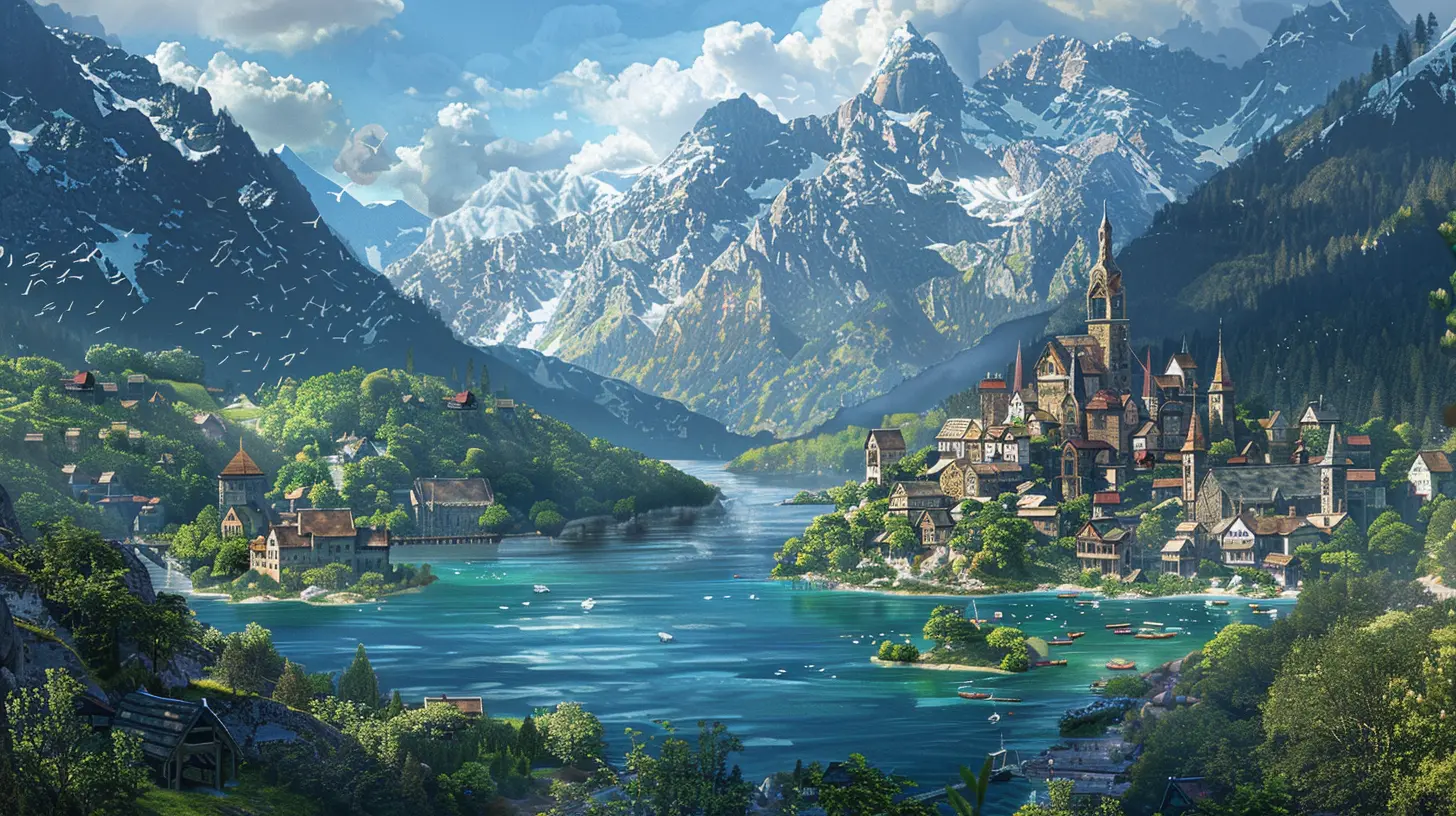
3. Yharnam — Bloodborne
Dark. Decaying. Dripping in disease and despair.Yharnam is a character you don't want to meet in a dark alley. But you will—again and again. And it’ll beat you down until you either cry or get good.
But here’s the deal: Yharnam’s layout makes you paranoid. Its twisted architecture, looping alleyways, and grotesque secrets unfold like an ever-worsening fever dream. It's not just hard—it’s haunting.
You feel like the city resents you being there. And maybe it does. Because in Bloodborne, the setting is part of the horror. It doesn't jump out at you—it sinks into you.
4. Columbia — BioShock Infinite
Where Rapture submerged you in decay, Columbia dazzles you with superficial beauty.At first glance, it’s all Americana and blue skies. Floating streets, golden statues, barbershop quartets—it feels like paradise. But scratch the surface for five seconds, and it all goes pear-shaped.
Columbia is a case study in cognitive dissonance. It’s beautiful, but it’s built on oppression, racism, and religious extremism. As you ascend through this faux-perfect city, the environment morphs right along with your understanding of it.
It’s not just a shift in mood. It’s a betrayal. And boy, does Columbia stab you in the back with a pretty smile on its face.
5. The USG Ishimura — Dead Space
This ship? Yeah, it's out to kill you. And it's not subtle about it.The USG Ishimura is, hands-down, one of the most terrifying environments ever made in gaming. It's the perfect blend of claustrophobic corridors, flickering lights, and creepy sound design.
What makes it feel like a character? It doesn’t just house the enemies—you feel like it is the enemy. Mechanical groans echo through the hull. Blood trails lead to nowhere. You keep expecting the walls themselves to tear open.
In Dead Space, isolation is weaponized. And the Ishimura is the gun.
6. The Mojave Wasteland — Fallout: New Vegas
The Mojave isn’t just sand and ruins. It’s a living, breathing history book of choices and consequences.Cities crop up amidst ruins. Factions clash over ideology. The skyline is dotted with relics of the past and glimpses of the future.
But here's the thing—the Mojave doesn’t care about you. It just is. It’s impartial. Whether you save a town or nuke it, the desert keeps rolling on, sun beating down like a relentless overseer.
You carve your own story, but the wasteland? It’s always watching. Always testing.
7. Limbo — INSIDE
Few games embrace minimalism like INSIDE. And fewer use it so effectively.The world in INSIDE is stripped down—monochrome, cold, and strangely quiet. But that emptiness speaks volumes. It’s oppressive. It's unnerving. You’re not just moving through it; you’re smothered by it.
The environment tells you everything. No dialogue. No exposition. Just the weight of architecture and atmosphere.
It’s one of the rare games where silence is more terrifying than any scream.
8. The Island — The Witness
Imagine an island that’s both stunning and smug.In The Witness, the bright colors and serene setting hide a diabolically clever brain teaser. The island itself is the puzzle. Paths, trees, shadows—even puddles—contain secrets.
It doesn't help you. It mocks you. Every missed clue feels like the island is shaking its head, whispering, “Try harder.”
It’s beautiful, yes. But it’s intimidating. Genius wrapped in scenery. When you finally crack a solution, it feels like the island is grudgingly nodding in approval.
And honestly? You live for that feeling.
9. S.T.A.L.K.E.R.’s Zone — Shadow of Chernobyl
This one’s not just bleak—it’s radioactive.The Zone isn’t designed to welcome you. It’s erratic, dangerous, and dripping with dread. Storms crackle. Anomalies distort reality. Bandits and mutants hide in every corner.
But somehow, it pulls you in. The desolation is mesmerizing. You start caring about its secrets. Obsessing over abandoned labs and military outposts.
It’s a place that constantly reminds you: "You don't belong here." But you stay anyway. Because some part of you wants to understand it. Needs to.
What Makes These Environments So Memorable?
So what’s the secret sauce?Well, it’s a mix of design, storytelling, and vibes. These environments:
- Tell stories without words
- Evoke emotion—terror, awe, serenity, dread
- Evolve with the player’s progress
- Play with perception
- Make the world feel personal
You walk through a hallway, and it’s not just a hallway. It’s a graveyard, or a memory, or a trap. And those feelings stick with you.
It’s like the best haunted house you’ve ever been inside—except the ghost is the building itself.
Why It Matters for the Future of Games
As graphics improve and storytelling gets more ambitious, environments are becoming even more vital. Game worlds are expanding. We’re seeing fully reactive ecosystems. Dynamic weather. Real-time destruction. But it’s not just about tech.It’s about feeling.
A great game doesn’t just ask you to play—it asks you to exist in its world. To be present and immersed. And when the environment becomes a character, you're no longer a player. You're a participant in something bigger.
That’s where magic happens.
Final Thoughts: When Places Speak Louder Than Voices
Whether it’s the eerie echoes of Yharnam, the cheerful cruelty of Columbia, or the silent brilliance of The Witness’s island, these environments stay with us.They haunt us. Inspire us. Mock us sometimes. But above all—they remind us that in gaming, sometimes the most iconic character is the one that can’t speak, can’t move, and doesn’t need to.
Because it’s already said everything just by being there.
all images in this post were generated using AI tools
Category:
Game WorldsAuthor:

Leandro Banks
Discussion
rate this article
2 comments
Malia Weber
Ah, yes, because nothing screams character development like a tree with a tragic backstory. Who needs complex protagonists when we can have landscapes with elaborate emotional arcs? I can’t wait for the next installment: "Mountains: The Unsung Heroes of Gameplay!
February 2, 2026 at 4:25 AM
Leandro Banks
Haha, right? Sometimes the scenery steals the show! 🌳🏔️
Zia Martin
This article insightfully explores how certain game environments transcend their roles as mere backdrops, becoming integral to storytelling and player experience. By analyzing titles like "Dark Souls" and "Skyrim," it highlights how atmospheric design and interactive elements forge emotional connections, transforming landscapes into dynamic characters that shape narratives and player engagement.
January 31, 2026 at 4:49 PM
Leandro Banks
Thank you for your thoughtful comment! I'm glad you found the exploration of game environments as integral components of storytelling compelling. Games like "Dark Souls" and "Skyrim" truly exemplify how landscapes can evoke deep emotional connections.