Multiplayer Game Worlds That Encourage Cooperation
3 June 2026
Have you ever found yourself lost in a game world, not because you couldn’t figure out what to do, but because you stumbled upon strangers who had your back? Those unexpected moments of teamwork—where you and another player, often without speaking a single word, pull off a perfectly timed rescue or complete a complex puzzle—are rare and magical.
We're diving into the virtual realms where cooperation isn’t just a bonus—it’s embedded into the game’s DNA. Multiplayer titles that reward collaboration over domination, forcing players to lean on each other, truly stand out in an industry that often idolizes lone-wolf heroes.
Let’s talk about the games that bring people together in meaningful, sometimes emotional, sometimes chaotic—but always unforgettable—ways.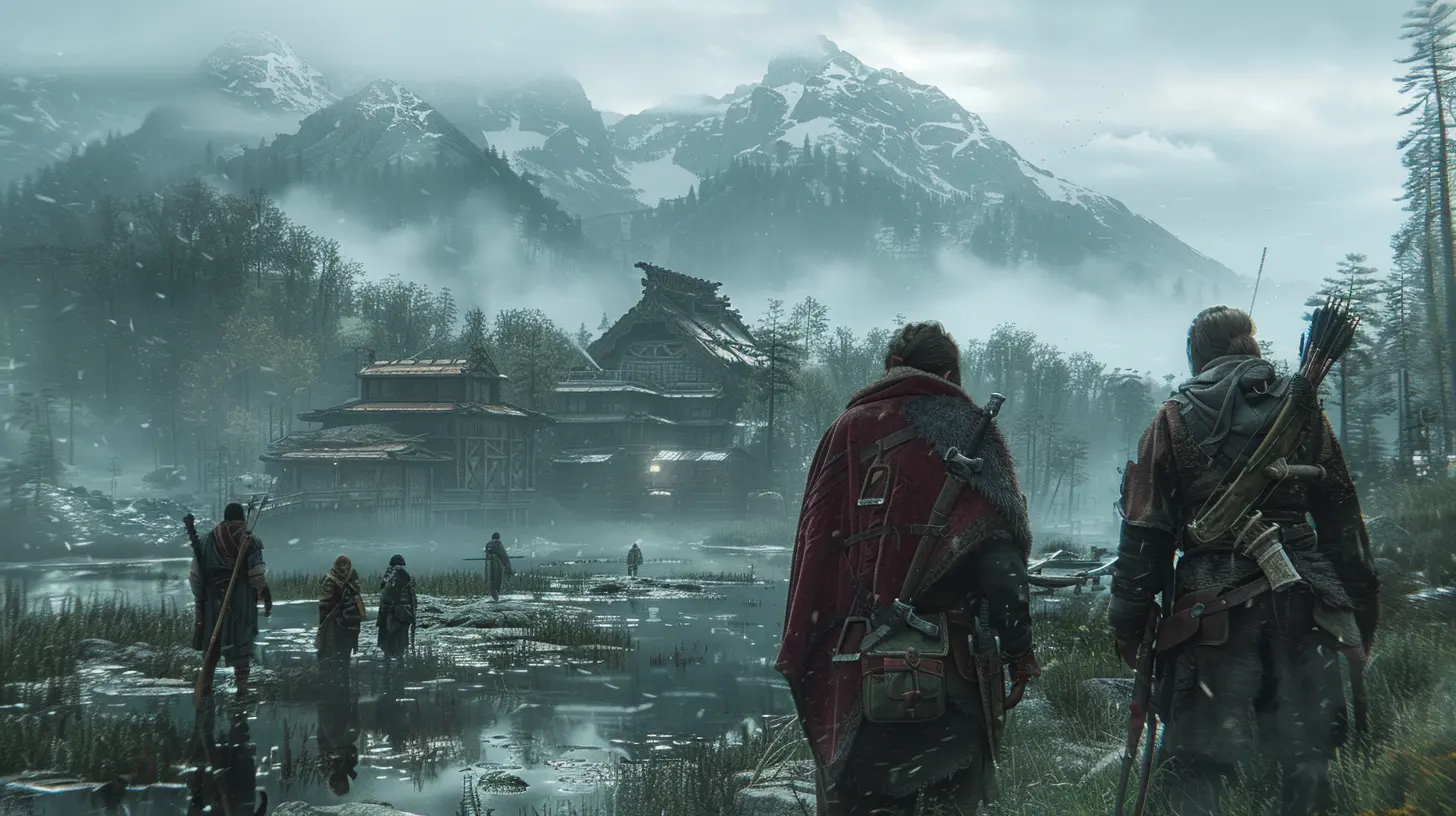
Why Cooperation in Games Just Hits Different
So, why do cooperative mechanics in multiplayer games feel so satisfying? It’s more than just beating a level or winning a match—it's that shared victory, the unspoken bond forged in digital fire.Unlike competitive games where it’s every player for themselves, these games reward empathy, strategy, and trust. They ask you to depend on each other, and sometimes that makes for the most powerful stories. Like when your squad revives you instead of chasing a kill. Or when a stranger teaches you how to tackle a tricky boss fight.
In a way, these games mimic real-life relationships. Communication matters. Patience pays off. Selfishness can lead to failure. It’s honestly kind of poetic, right?
The Secret Sauce: Game Design That Forces Us to Work Together
Not all multiplayer games are designed with cooperation at their core. Some just allow it. The difference? In a true cooperative game world, you can’t progress without helping each other.These games are laced with mechanics that demand collaboration:
- Shared objectives that require timing and coordination.
- Roles that complement each other (think healer, tank, DPS).
- Puzzles that can’t be solved alone.
- Environments that push players to stick together for safety.
All these features subtly nudge players to communicate, plan, and most importantly—trust.
Top Multiplayer Game Worlds That Truly Encourage Cooperation
Let’s break down some standout titles that take cooperative play to the next level.1. Sea of Thieves – Sail or Sink Together
If you and your crew can't coordinate in Sea of Thieves, you’ll be shark food in no time. This pirate-themed sandbox doesn’t just suggest cooperation—it demands it.From raising sails and steering the ship to repairing damage and firing cannons, every voyage requires teamwork. It’s impossible for one player to run a galleon alone. And when things go sideways (and they will), who you’ve got on board makes all the difference.
You’ll laugh, panic, and maybe even yell a little—but you’ll come out of it with legendary stories. Trust me, nothing builds friendship faster than surviving a kraken attack together.
2. Among Us – Deception Meets Deduction
Weird choice, right? But hear me out.Among Us is technically competitive, but surviving as a crewmate hinges on cooperation and communication. Sharing intel, working as a team, and vouching for each other builds temporary alliances that can be the difference between life and a very dramatic death.
And if you’re the Impostor? Your success lies in exploiting the trust between others. That dynamic only works because the game teaches players to lean on each other and think as a group.
It’s social strategy at its finest—with betrayal served cold.
3. Deep Rock Galactic – Rock and Stone for All
In this underrated gem, you play as dwarf miners diving into unstable caverns to extract precious minerals—but these caves aren't empty.What makes Deep Rock Galactic stand out is how it forces classes to work together. An Engineer can lay down platforms, the Scout lights up the cave, the Driller clears paths, and the Gunner protects the team. No one can succeed alone.
It’s loud. It’s chaotic. And it’s impossible to escape without someone having your back. Whether you're climbing cave walls or being swarmed by alien bugs, you’ll come to appreciate your team real quick.
4. It Takes Two – The Ultimate Partner Test
This game doesn’t just encourage cooperation—it requires it in every single mechanic. Built for two players, It Takes Two is part co-op platformer, part relationship therapy.Both characters have unique skills, and every puzzle, every boss, every platforming section demands coordination. You can’t brute-force your way through anything—every step forward is a duo achievement.
It's quirky, emotional, and brilliantly designed to make you and your partner work through challenges together (and maybe argue a bit along the way).
5. Valheim – Viking Survival, Squad Style
Valheim throws you into a mythical Norse wilderness, and while you can go solo, the experience truly shines in multiplayer.Building epic longhouses, sailing across treacherous seas, taking down godlike bosses—it all becomes exponentially better (and more manageable) with friends.
Players naturally form roles: one might specialize in farming, another in combat or crafting. The gameplay doesn’t force this, but the design encourages organic cooperation, which is kind of beautiful when you think about it.
6. Overcooked! 2 – A Recipe for Chaos (and Teamwork)
If you want to test the strength of a friendship or relationship, toss them into a kitchen in Overcooked! 2.It’s simple in concept—cook and serve food under time pressure—but the execution? Pure madness. You and your team must coordinate orders, chop ingredients, wash dishes, and put out fires (literally).
You’ll scream. You’ll laugh. You’ll probably fail a lot. But when you finally nail a 3-star kitchen? It feels like winning a gold medal at the culinary Olympics.
7. Phasmaphobia – Ghost Hunting With a Side of Trust
Horror games are usually solo affairs, but Phasmaphobia rewrites the rules. You and a group of up to 4 players step into haunted buildings to identify ghosts—without getting, you know, murdered.Success means relying on each other to carry equipment, record evidence, and most importantly—not panic and bail when the flashlight starts flickering.
The catch? Sometimes, communication devices break down just when you need them most. Meaning survival often depends on your team staying calm and sticking together.
It's hauntingly good teamwork.
8. Destiny 2 Raids – Synchronization or Bust
Destiny 2 offers lots of solo content, but its raids are masterpieces of cooperative design. These multi-hour endeavors are impossible to complete alone.Each raid has specific mechanics that require perfect timing, role designation, and communication. Even a single slip-up can wipe the entire squad.
Pulling off a flawless raid run feels like conducting a symphony composed of bullets, fireballs, and tight jumps. It’s intense—but so, so worth it.
The Real-World Impact of In-Game Cooperation
Here’s something wild to think about: playing these games can actually improve real-life skills. Stuff like:- Communication under pressure.
- Conflict resolution.
- Leadership and delegation.
- Emotional intelligence and empathy.
It’s learning through play—wrapped in magic spells, battle armor, and ghost-hunting gadgets.
Also, let’s not forget the friendships that form through co-op games. Some of the best online relationships come from overcoming virtual adversity together. There’s something special about sharing triumphs and failures with someone, even if they’re halfway around the world.
Final Thoughts: Why We Need More Games Like These
Gaming is often dismissed as mindless escapism—but cooperative multiplayer games prove it can be much more. They give us a space to connect, learn, and grow together.In a world that can feel increasingly divided, there's something powerful about a virtual environment that says, “You can’t do this alone. You need each other.”
So whether you're navigating a Viking tundra, cooking in a frantic kitchen, or battling interdimensional darkness—know this: the best wins are shared ones.
And if you haven’t tried one of these games yet? Grab a friend. Or better yet, make a new one in-game. Because at the end of the day, gaming with others isn’t just better—it’s the heart of the experience.
all images in this post were generated using AI tools
Category:
Game WorldsAuthor:

Leandro Banks
Discussion
rate this article
1 comments
Savannah McCarthy
Great read! It's refreshing to see how some multiplayer games really bring players together. Cooperation can lead to memorable moments and epic victories. Can't wait to dive into some of these worlds with friends and create our own adventures. Teamwork makes the dream work!
June 3, 2026 at 3:07 AM